

Senators to Zuckerberg: We may need to regulate Facebook to protect privacy
CLOSE
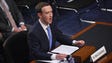
During a Senate hearing with Facebook founder Mark Zuckerberg, a few of the questions asked by senators seemed to require an explanation of the basics.
USA TODAY
WASHINGTON – Facebook CEO Mark Zuckerberg’s promises to do more to protect the privacy of users’ data failed to end calls from lawmakers of both parties Tuesday to regulate the social media giant in the wake of a massive privacy breach.
Sen. Lindsey Graham, R-S.C., said one of his main takeaways from Zuckerberg’s testimony Tuesday before two Senate committees is that “Facebook is a virtual monopoly and monopolies need to be regulated.”
“I expect the regulatory regime for a company like Facebook will be challenging and difficult,” Graham said. “It could possibly take the creation of new laws and regulations to deal with this platform. But I do believe this: continued self-regulation is not the right answer when it comes to dealing with the abuses we have seen on Facebook.”
More: Did Zuckerberg just suggest a paid, ad-free version of Facebook?
Zuckerberg had sought to apologize for high-profile privacy breaches at Facebook and convince doubtful lawmakers that he can fix the problem without government intervention.
Zuckerberg is trying to restore public confidence after revelations that information from up to 87 million Facebook users was shared with Cambridge Analytica, a data mining firm used by the Trump campaign in the 2016 election. The information was shared without users’ knowledge.
Sen. John Kennedy, R-La., said he expects a rash of bills to regulate Facebook in the weeks ahead.
“It’s up to you whether they pass or not,” Kennedy told Zuckerberg, adding that the CEO could either hire lobbyists to fight the bills or work with Congress to find a solution.
CLOSE
Facebook CEO Mark Zuckerberg’s comments could mean the company is contemplating a paid, and presumably ad-free, version of the social media platform.
USA TODAY
Zuckerberg said he would not automatically oppose federal regulations as long as they’re the “right regulations.” He did not specify exactly what those would be beyond his endorsement of a bipartisan bill to require disclosure of who is paying for political ads.
Senate Commerce Committee Chairman John Thune, R-S.D., charged that Facebook has a poor record of protecting its users’ privacy.
“After more than a decade of promises to do better, why should we trust Facebook on privacy?” Thune asked.
Zuckerberg said the company is learning to be more proactive to make sure its platform is used for good and not usurped by bad actors.
“At the end of the day, this is going to be something where people will measure us on our success (in protecting their privacy),” he said. “People will see real differences.”
The 33-year-old CEO acknowledged that he’s “made a lot of mistakes in running the company” and is working to restore people’s faith in Facebook.
The Republican-led Congress is generally opposed to increased government regulation of businesses, and Democrats like Silicon Valley’s liberal leanings. However, the revelations of Russian meddling and privacy breaches at Facebook increased pressure on lawmakers to act.
“The industry needs to work with Congress to determine if and how we need to strengthen privacy standards to ensure transparency for billions of consumers,” said Senate Judiciary Chairman Chuck Grassley, R-Iowa. “We can’t undo the damage that’s been done, but we can work together in setting new rules of the road for our data.”
More: Zuckerberg faces senators to explain Facebook data breaches, Russia election meddling
More: No hoodie. No gray T-shirt. Facebook CEO Mark Zuckerberg suited up for Congress
More: Wozniak: Facebook is ‘not ethical,’ but he is sticking with Swarm
As he tries to fend off restrictive regulations, Zuckerberg last week came out in favor of the Honest Ads Act, a bipartisan bill by Sens. Amy Klobuchar, D-Minn., Mark Warner, D-Va., and John McCain, R-Ariz., that would require social media companies to publicly disclose who pays for political ads. Newspapers and broadcast stations must follow such rules, and Zuckerberg said Facebook voluntarily adopted them. Twitter announced Tuesday that it would support the bill, too.
Zuckerberg told senators Tuesday that the giant social media company is in “an arms race” with Russia and other foreign adversaries that seek to exploit the platform to influence U.S. elections.
Zuckerberg said Facebook is getting better at using artificial intelligence to identify fake Facebook accounts that may try to interfere in elections and spread misinformation. Russian companies with ties to the Kremlin used fake accounts to try to sow division among U.S. voters in the 2016 election, according to Facebook.Â
“I have more confidence that we’re going to get this right,” Zuckerberg told Sen. Dianne Feinstein, D-Calif. He said Facebook identified and removed fake accounts that were trying to interfere in elections in France and Germany and in Alabama’s special U.S. Senate election in December.
As Facebook gets better at identifying and taking down the fake foreign accounts, groups in Russia and other countries get better at trying to fool Facebook, Zuckerberg said.
“So this is an arms race,” he said. “As long as there are people sitting in Russia whose job it is to interfere with elections around the world, this is going to be an ongoing conflict.”
Posted!


![Facebook CEO Mark Zuckerberg testifies before a joint]() 1 of 19
1 of 19![Facebook CEO Mark Zuckerberg arrives to testify before]() 2 of 19
2 of 19![Facebook CEO Mark Zuckerberg testifies before a joint]() 3 of 19
3 of 19![Facebook CEO Mark Zuckerberg pauses while testifying]() 4 of 19
4 of 19![Facebook CEO Mark Zuckerberg arrives to testify before]() 5 of 19
5 of 19![Facebook CEO Mark Zuckerberg testifies before a joint]() 6 of 19
6 of 19![Facebook CEO Mark Zuckerberg delivers his opening statement]() 7 of 19
7 of 19![Facebook CEO Mark Zuckerberg testifies before a joint]() 8 of 19
8 of 19![Facebook CEO Mark Zuckerberg testifies before a joint]() 9 of 19
9 of 19![Facebook CEO Mark Zuckerberg testifies before a joint]() 10 of 19
10 of 19![Facebook CEO Mark Zuckerberg arrives to testify before]() 11 of 19
11 of 19![Facebook CEO Mark Zuckerberg testifies before a joint]() 12 of 19
12 of 19![Facebook CEO Mark Zuckerberg takes his seat as he arritves]() 13 of 19
13 of 19![100 cutout figures of Facebook CEO Mark Zuckerberg]() 14 of 19
14 of 19![The witness table is seen before Facebook CEO Mark]() 15 of 19
15 of 19![The committee room is set up before Facebook CEO Mark]() 16 of 19
16 of 19![People wait in line to attend the joint hearing of]() 17 of 19
17 of 19![Senate Judiciary Committee Chairman Chuck Grassley,]() 18 of 19
18 of 19![Facebook CEO Mark Zuckerberg leaves a meeting with]() 19 of 19
19 of 19




bought ads and placed false news stories on Facebook in an effort to sow dissension among U.S. voters. Zuckerberg initially scoffed at the idea that Russia exploited the social media platform, then apologized after discovering that Russian companies spent $100,000 on 3,000 ads before, during and after the 2016 election.
In his opening statement Tuesday, Zuckerberg apologized again.
“We didn’t take a broad enough view of our responsibility, and that was a big mistake,” Zuckerberg said. “It was my mistake, and I’m sorry. I started Facebook, I run it, and I’m responsible for what happens here.”
Sen. John Cornyn of Texas, the No. 2 Republican in Senate leadership, said apologies are not enough.
“Facebook and other social media platforms need to come clean with the American people,†Cornyn said in a speech on the Senate floor before Tuesday’s hearing. “An apology, while necessary and welcome, is not enough. These companies must back up their words with actions that better safeguard the American consumer.”
Cornyn said Congress should consider passing data privacy laws that give consumers more control over their personal information and require companies to disclose “in plain English” what data they collect.
“Perhaps we should treat social media platforms as information fiduciaries and impose legal obligations on them, as we do with lawyers and doctors who are privy to some of our most personal private information,” Cornyn said.
Michael Copps, a former member of the Federal Communications Commission and a special adviser to Common Cause, a government watchdog group, said Facebook isn’t capable of policing itself. He called on Congress to pass the Honest Ads Act and approve privacy legislation.
“The Facebook/Cambridge Analytica privacy scandal is another example in a long list where companies have failed to protect the online privacy of their users,” Copps said Tuesday. “Now is the time for Congress to pass comprehensive privacy legislation that gives consumers opt-in choice, not just for Facebook but across-the-board for those who hold our personal data.”
As Sen. Bill Nelson, D-Fla., put it: “If Facebook or other online companies will not or cannot fix the privacy invasions, then we in Congress are going to have to.”
Contributing: Deirdre Shesgreen
Â