

64% of assailants in mass attacks suffered from symptoms of mental illness, Secret Service report finds
CLOSE
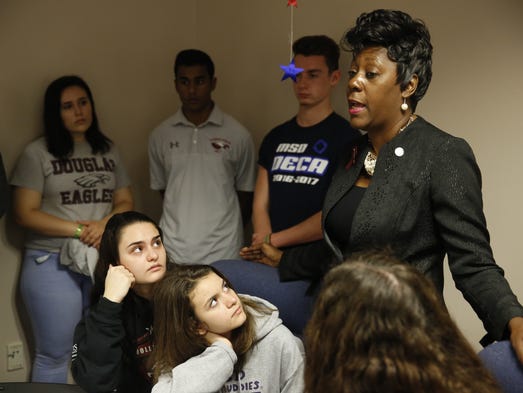
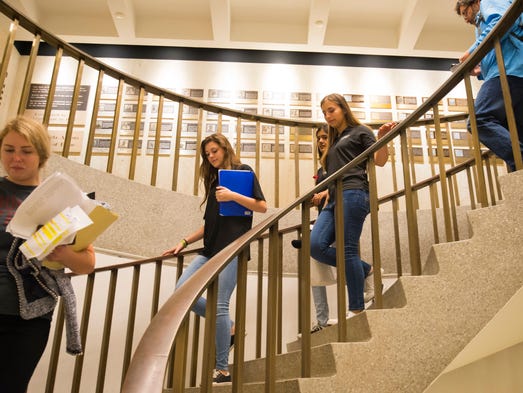
Neurologist Dr. Jay Lombard and a group of high school students discuss the importance of mental health awareness in schools and methods for coping with stress.
USA TODAY
WASHINGTON — A striking number of suspects linked to violent attacks in schools and other public places last year were stalked by symptoms of mental illness and nearly half were motivated by real or perceived personal grievances, a new Secret Service report has found.
An examination of 28 attacks, which claimed nearly 150 lives and wounded hundreds of others — from Orlando to Las Vegas — also found that more than three-quarters of the assailants engaged in suspicious communications or conduct that raised concerns from others in advance of the assaults, according to the report due for release Thursday.
The analysis, prepared by the Secret Service’s National Threat Assessment Center, had been underway months before the Feb. 14 massacre at a Parkland, Fla., high school, but its findings are likely to further fuel concerns about the untreated mentally ill and their access to high-powered firearms.
In the Parkland case, which has reinvigorated a national debate on gun safety, social workers, mental health counselors, school administrators and law enforcement were all warned about Nikolas Cruz’s deteriorating mental state and risk of violence before he allegedly launched the attack that left 17 dead.
The new Secret Service review builds on a lengthy, prior examination issued by the agency in 2015, which found that more than half of suspects involved in 43 attacks targeting government facilities or federal officials between 2001 and 2013 suffered symptoms of mental illness, including paranoia, delusions and suicidal thoughts.
In the new report, authorities found that 64% of suspects suffered from symptoms of mental illness. And in 25% of the cases, attackers had been “hospitalized or prescribed psychiatric medications” prior to the assaults.
Among the most glaring of those cases involved Devin Kelley, whose stunning November attack on a Texas church left 26 dead and 20 others wounded.
In the years leading up to the assault, Kelley battered his young stepson, menaced his former wife, was accused of sexual assault, had a history of stalking former girlfriends and in 2012 escaped from a mental health facility.Â
According to a police report related to Kelley’s escape, the gunman — then a member of the U.S. Air Force — was hospitalized after he was charged by military authorities with fracturing the skull of his 1-year-old stepson.
The Air Force later acknowledged that it failed to flag Kelley as banned from buying the weapons he used in the attack because of his record of domestic violence. Using the same weapons, Kelley killed himself following the November church shooting.
The Sutherland Springs’ First Baptist Church massacre was one of two church shootings examined in the Secret Service report. Four school attacks also analyzed, along with 13 assaults involving places of business.
“These acts violated the safety of the places where we work, learn, shop, relax and otherwise conduct our day-to-day lives,” the report stated. “The resulting loss of 147 lives and injury to nearly 700 others had a devastating impact on our nation as a whole.”
One the incidents sent a shiver through the nation’s capital last June when an Illinois man opened fire on Republican lawmakers with a modified assault rifle and handgun at northern Virginia baseball field.
Shortly after the attack, which left House Majority Whip Steve Scalise critically wounded and four others injured, the FBI described gunman James Hodgkinson as adrift and struggling to cope with an array of personal problems.Â
Plagued by financial difficulties, 66-year-old man who ultimately died in a shootout with police, had anger management problems and abruptly left a strained marriage in Belleville, Ill., more than month before the shooting to take up residence in a van on the outskirts of the nation’s capital — along with his weapons.
He was prone to rage against the politics of President Trump and was carrying the names of six lawmakers in his pocket at the time he was fatally wounded.
“He was struggling in all kinds of different ways,” FBI Assistant Director Tim Slater said a week after the attack.
Posted!









![Students from Marjory Stoneman Douglas High School]() 1 of 36
1 of 36![Protesters gathered outside of the Florida Capitol]() 2 of 36
2 of 36![Students from Marjory Stoneman Douglas High School]() 3 of 36
3 of 36![A survivor of the Marjory Stoneman Douglas High School]() 4 of 36
4 of 36![Marjory Stoneman Douglas High School Student Florence]() 5 of 36
5 of 36![Brandon Wolfe, a survivor of the Pulse Nightclub massacre,]() 6 of 36
6 of 36![Marjory Stoneman Douglas High School shooting survivors]() 7 of 36
7 of 36![Florida state senator Debbie Mayfield, R-17th District]() 8 of 36
8 of 36![Former American astronaut Scott Kelly walks out of]() 9 of 36
9 of 36![A Second Amendment plaque hangs outside the office]() 10 of 36
10 of 36![Tallahassee mayor Andrew Gillum marches with Florida]() 11 of 36
11 of 36![Jodi-Ann Henningham, right, and Jeremiah Carter, both]() 12 of 36
12 of 36![Tallahassee mayor Andrew Gillum speaks at the March]() 13 of 36
13 of 36![A rally against gun violence in Florida culminates]() 14 of 36
14 of 36![Marjory Stoneman Douglas student Florence Yared speaks]() 15 of 36
15 of 36![Marjory Stoneman Douglas High School students walk]() 16 of 36
16 of 36![A rally against gun violence in Florida culminates]() 17 of 36
17 of 36![A rally against gun violence culminates at the steps]() 18 of 36
18 of 36![Marjory Stoneman Douglas High School student Tyra Hemans]() 19 of 36
19 of 36![Rep. Patricia Williams, D-Fort Lauderdale, right, hugs]() 20 of 36
20 of 36![Marjory Stoneman Douglas High School student Logan]() 21 of 36
21 of 36![Rep. Patricia William, D-Fort Lauderdale, meets with]() 22 of 36
22 of 36![Marjory Stoneman Douglas High School parent Sergia]() 23 of 36
23 of 36![Marjory Stoneman Douglas High School freshman Emma]() 24 of 36
24 of 36![Marjory Stoneman Douglas High School students Sindhu]() 25 of 36
25 of 36![Survivors from the fatal shooting at Marjory Stoneman]() 26 of 36
26 of 36![Students from Marjory Stoneman Douglas High School]() 27 of 36
27 of 36![Florida Sen. Lauren Book, center, leads student survivors]() 28 of 36
28 of 36![Tallahassee high schoolers descend on the Florida Capitol]() 29 of 36
29 of 36![Students from Marjory Stoneman Douglas High School]() 30 of 36
30 of 36![Tallahassee high schoolers descend on the Florida Capitol]() 31 of 36
31 of 36![Student survivors from the fatal shooting at Marjory]() 32 of 36
32 of 36![Florida Sen. Debbie Mayfield, center, listens as student]() 33 of 36
33 of 36![Students from Marjory Stoneman Douglas High School]() 34 of 36
34 of 36![Florida Rep. Kristin Jacobs talks with student survivors]() 35 of 36
35 of 36![Students from Marjory Stoneman Douglas High School]() 36 of 36
36 of 36







Â
Â
Â
Â
Â
Â
Â