

10 things you may have forgotten about 9/11

CLOSE
The NYPD marked the 15th anniversary of the World Trade Center attacks with a parade to honor the 23 officers it lost on Sept. 11, 2001. Police departments from around the United States and Canada joined the march around lower Manhattan.(Sept. 9)
AP
This story originally published in September of 2016.Â
WASHINGTON — Monday marks the anniversary of the terrorist attacks on Sept. 11, 2001, that killed 2,977 people in New York, the Pentagon and in a field in rural Pennsylvania. The attacks and the reaction to them have shaped U.S. policy for more than 15 years, leaving a nation that is far more vigilant and jittery about terrorism. Yet for all of the talk about 9/11, many elements of the attacks and the actions leading up to them have receded from the public memory. Here are 10 things you may have forgotten about 9/11:
1. We don’t know how the hijackers got into the cockpits of some of the planes
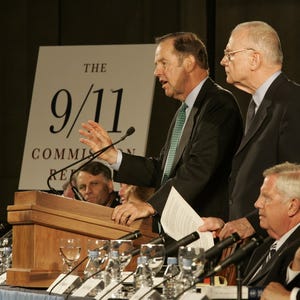
The comprehensive report of the commission created to investigate the attacks, which was published in 2004, said no one could determine how the hijackers were able to get into the cockpits of the four commercial airliners they hijacked. A flight attendant on American Flight 11 “speculated that they had ‘jammed their way’ in,” the 9/11 report said. “Perhaps the terrorists stabbed the flight attendants to get a cockpit key, to force one of them to open the cockpit door, or to lure the captain or first officer out of the cockpit.” Once the hijackers gained control of American 11, they guided it toward New York’s World Trade Center towers, where it stuck the North Tower of the World Trade Center at 8:46 a.m. All 81 passengers, including the five hijackers, and nine crew members died in the crash, along with an unknown number of people in the tower.
2. Passengers and crew aboard the planes provided critical information
Those aboard the four hijacked flights — American 11, United 175, American 77 and United 93 — called family and friends from their cellphones or used the aircrafts’ radio communications to report the hijackings. That alerted authorities to the hijackings and enabled them to understand why they could not track the planes after their navigation systems were turned off.
American 77, which departed Washington’s Dulles airport, was hijacked near Indianapolis and then turned back toward Washington. Its destination: the Pentagon. Passenger Barbara Olson, the wife of Solicitor General Ted Olson, called her husband to report “that the flight had been hijacked, and the hijackers had knives and box cutters.” American 77 crashed into the Pentagon at 9:37 a.m., killing all 64 people on board, including the five hijackers. Information gathered from the calls from flight attendants and passengers enabled investigators to piece together the events on board each plane and how the hijackings occurred.
3. Light passenger loads made it easier for the hijackers to maneuver
American 11, bound from Boston to Los Angeles, had 81 passengers on board out of a possible 158, according to the 9/11 report and aircraft data.
United 175, which also left Boston for Los Angeles, had 56 passengers out of a possible 168. That was a “load factor” of 33%, considerably lower than the 49% average for that flight, a federal investigation showed.
American 77, headed to Los Angeles from Washington, had 58 passengers out of a capacity of 176, the 9/11 report and other reports said.
United 93, bound from Newark, N.J., to San Francisco, had only 37 passengers for a 20% load factor, which was far below the normal 52%.
4. Missing hijacker made it easier for United 93 passengers to storm the cockpit
This is the only one of the four hijacked flights that did not strike its intended target, the U.S. Capitol. Some of that is because it was the only one that had four hijackers instead of the five that took down American 11, American 77 and United 175. “The operative likely intended to round out the team for this flight, Mohamed al Kahtani, had been refused entry by a suspicious immigration inspector at Florida’s Orlando International Airport in August,†the 9/11 report said. As the passengers were just seconds away from getting into the cockpit, the hijacker at the controls crashed the plane in an empty field in Shanksville, Pa., just 20 minutes flying time from Washington.
Posted!

Brooklyn firefighters George Johnson, left, of ladder 157, Dan McWilliams, center, of ladder 157, and Billy Eisengrein, right, of Rescue 2, raise a flag at the World Trade Center site in New York.Â
 1 of 22
 2 of 22
 3 of 22
 4 of 22
 5 of 22
 6 of 22
 7 of 22
 8 of 22
 9 of 22
 10 of 22
 11 of 22
 12 of 22
 13 of 22
 14 of 22
 15 of 22
 16 of 22
 17 of 22
 18 of 22
 19 of 22
 20 of 22
 21 of 22
 22 of 22
5. The World Trade Center had been targeted before
New York’s World Trade Center held an iconic status for terrorists even before 9/11. Shortly after noon on Feb. 26, 1993, a bomb planted in a van parked in the center’s underground parking garage exploded, killing six people and wounding more than 1,000, the 9/11 report said. “The bombing signaled a new terrorist challenge, one whose rage and malice had no limit,†the 9/11 report said. “Ramzi Yousef, the Sunni extremist who planted the bomb, said later that he had hoped to kill 250,000 people.â€
6. Vice President Cheney ordered United 93 to be shot down
Before the passengers forced the crash of United 93, then-vice president Dick Cheney gave the approval for the plane to be shot down before it could reach Washington, the 9/11 report said.
“The Vice President authorized fighter aircraft to engage the aircraft,†the report said.
However, the report added, the Air Force fighters that were airborne at the time probably would not have found and reached United 93 in time. Military “officials have maintained consistently that had the passengers not caused United 93 to crash, the military would have prevented it from reaching Washington, D.C.,†the 9/11 report said. “That conclusion is based on a version of events that we now know is incorrect.â€
7. Earlier plots also targeted commercial aircraft
Ramzi Yousef, who planned the 1993 World Trade Center bombing, had planned a massive attack on 12 U.S. airliners over the Pacific in 1995, the 9/11 report said. Yousef worked with his uncle, Khalid Sheikh Mohammed, to devise the plot, the report said. Mohammed later became one of the masterminds of 9/11. Yousef was arrested in Islamabad, Pakistan, on Feb. 7, 1995, after an accomplice turned him in, the report said. The Manila plot was never carried out.
8. The U.S. worked on multiple attempts to kill Osama bin Laden before 9/11
The CIA and other agencies developed a plan to capture bin Laden in early 1998, the report said. That was delayed and then revived, but it was hampered by concerns from military officials about relying on Afghan tribal leaders. Then-national security adviser Sandy Berger was concerned about what would be done with bin Laden if he was captured and whether the evidence against him could lead to a criminal conviction in a U.S. court. After the U.S. embassies in Kenya and Tanzania were bombed on Oct. 8, 1998, President Bill Clinton authorized cruise missile strikes against bin Laden’s compound in Afghanistan. He survived but was later killed by a Navy SEAL team in May 2011.
9. The CIA warned President Clinton about hijackings in 1998
In the Dec. 4, 1998, President’s Daily Brief from the CIA, the agency told Clinton that “Bin Ladin Preparing to Hijack US Aircraft and Other Attacks.†The plan, the agency said, was to hijack the planes to gain the release of Yousef and other terrorists, the 9/11 report said.
But the agency had no firm information, and the hijackings did not take place. Throughout December 1998, U.S. officials tracked bin Laden around the region and tried to develop a plan to attack him with cruise missiles.
10. Saudi Arabia had multiple ties to the hijackers
When the 9/11 report was released in 2004, 28 pages of material remained classified and the subject of intense speculation about their contents. Those pages, which were released in July, showed multiple links to associates of Saudi Arabian Prince Bandar, the former longtime ambassador to the United States. The documents, as USA TODAY reported in July, “show possible conduits of money from the Saudi royal family to Saudis living in the United States and two of the hijackers in San Diego. The documents also indicate substantial support to California mosques with a high degree of radical Islamist sentiment.” The pages were not released, because the details contained in them had not been confirmed or shown to be relevant to the 9/11 attacks. Fifteen of the 19 hijackers were from Saudi Arabia.
Other stories you’ll want to read:
1,113 families still have no real confirmation of 9/11 deaths
15 years after Sept. 11, the questions that still remain in our minds
The touching stories behind 9/11 tattoos
Newly published notes recount 9/11 aboard Air Force One: ‘We’re at war’
Clinton, Trump pay tribute to victims of 9/11
Obama praises diversity at Pentagon 9/11 tribute

CLOSEREMEMBERING SEPT. 11
9/11 victims honored in NYC | 1:26
Thousands of 9/11 victims’ relatives, survivors, rescuers and others have gathered at the World Trade Center to remember the deadliest terror attack ever on American soil. (Sept. 11)
AP
CLOSEREMEMBERING SEPT. 11
Walking tour of Ground Zero | 4:21
A video walkthrough of the 9/11 Memorial site in New York City.
USA TODAY

CLOSEREMEMBERING SEPT. 11
How a small town became an unlikely hero of 9/11 | 3:33
Nearly 7,000 air passengers were suddenly rerouted to Gander, Newfoundland, moments after the terrorist attacks of Sept. 11. Here’s how the small town stepped up in a big way.
USA TODAY

CLOSEREMEMBERING SEPT. 11
Permanent Reminders: 9/11 memorial tattoos | 1:08
Fifteen years after 9/11, we spoke to dozens of people who chose to memorialize the event on their skin. Here’s a look at some of their stories.

CLOSEREMEMBERING SEPT. 11
Video: World Trade Center Observatory – 102 floors up | 1:04
The observatory on the 102nd floor of One World Trade Center, along with the 9/11 Memorial, have made the World Trade Center site one of the most popular tourist sites in New York City.
Video by Seth Harrison/The Journal News

CLOSEREMEMBERING SEPT. 11
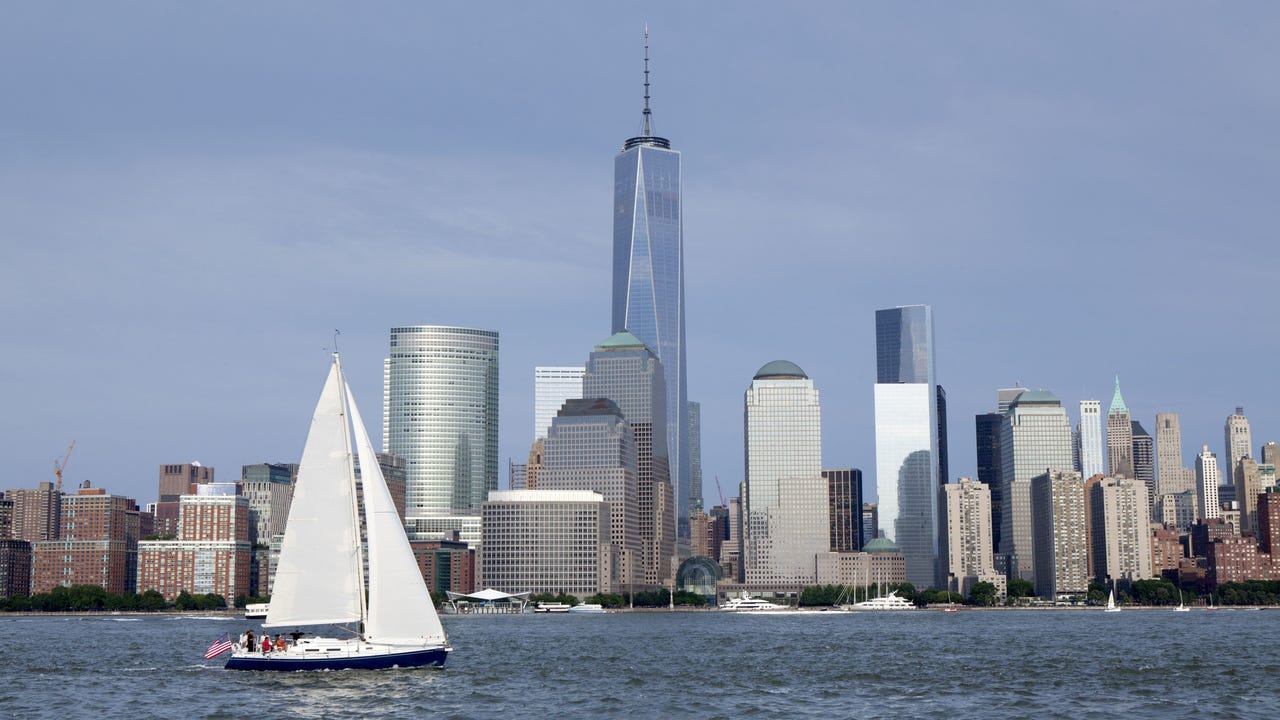
Similar photos of One World Trade approaching 9/11 captured a year apart | 0:30
For the second straight year, a stunning photo of One World Trade was captured the Thursday before the anniversary of the Sept. 11, 2001 terrorist attacks.
USA TODAY

CLOSEREMEMBERING SEPT. 11
Service dog helps 9/11 hero cope with PTSD | 1:52
Retired Port Authority police sergeant Dennis Frederick depends on his service dog to help fight PTSD.

CLOSEREMEMBERING SEPT. 11
A 9/11 survivor stays alive by not listening to others | 1:44
Evelyn Lugo, a 9/11 survivor, explains why her “never forget” tattoo gives her strength

CLOSEREMEMBERING SEPT. 11
Lost colleagues and friends remembered in 9/11 tattoos | 0:59
On 9/11 Steven Waldron was an off duty police officer who responded when people were in need. It took him fifteen years to finally get his memorial tattoo.

CLOSEREMEMBERING SEPT. 11
Never forget: Here’s why memorial tattoos are important | 0:52
Grief expert Susan Salluce talks about the importance of memorializing people and moments through tattoos.

CLOSEREMEMBERING SEPT. 11
15 years later, 9/11 tattoos remain strong | 1:05
Brian Branco wants you to remember his friends. Of of the five people he was with on September 11, 2001, only he and another colleague got out. The other three he has memorialized on his arm.

CLOSEREMEMBERING SEPT. 11
Permanent reminder: A touching story behind 9/11 ink | 1:13
Max Giaccone lost his father on September 11, 2001, when he was ten. A portrait of the two of them sits on his back. He says tattoos are a way to carry his father with him every day.

CLOSEREMEMBERING SEPT. 11
Deaf children sign the 9/11 story | 1:19
Deaf school children in Texas use sign language to paint a powerful portrait of what happened on Sept. 11.

CLOSEREMEMBERING SEPT. 11
Daily remembrance: White roses honor birthdays of 9/11 victims | 1:17
Every morning before the National September 11 Memorial Museum opens to the public, a volunteer places a white rose for every victim who would have celebrated a birthday that day.
Danielle Parhizkaran, The Bergen Record

CLOSEREMEMBERING SEPT. 11
Video: 9/11 Anniversary: Glenn Guzi’s decision to skip work | 3:46
Peekskill’s Glenn Guzi, program director for the World Trade Center at the Port Authority of NY and NJ, reflects on the last 15 years, Aug. 30, 2016 in Manhattan.
Video by Tania Savayan/The Journal News

CLOSEREMEMBERING SEPT. 11
Never forget: 9/11 tattoos pay tribute | 2:00
Hear the incredibly touching stories behind these 9/11 tattoos

CLOSEREMEMBERING SEPT. 11
Video: Welles Crowther, the Man in the Red Bandanna | 2:47
Remembering Welles Remy Crowther of Upper Nyack, the Man in the Red Bandanna, 15 years after Sept. 11.
Peter Carr/The Journal News

CLOSEREMEMBERING SEPT. 11
15 years after 9/11, unwelcome spotlight returns to Islam | 1:40
James Sues, executive director of the Council on American-Islamic Relations, the difficulties facing Muslim-American 15 years after 9/11.
Video by Chris Pedota, NorthJersey.com

CLOSEREMEMBERING SEPT. 11
9/11 Museum’s Flag Exhibit | 2:51
Shirley Dreifus, original owner of the famous Ground Zero flag, talks about its importance after it went missing for 15 years.

CLOSEREMEMBERING SEPT. 11
Video: Sites, sounds of National Sept. 11 Memorial | 2:11
The reflecting pools provide the backdrop for a solemn experience for those visiting the National Sept. 11 Memorial at the World Trade Center.
Video by Seth Harrison/The Journal News

CLOSEREMEMBERING SEPT. 11
15 years after 9/11, U.S. struggles to unite | 3:20
After Sept. 11, signs of unity seemed to well up everywhere in America, but 15 years later, many whose lives changed after the attacks wonder where that unity has gone. (Sept. 6)
AP

CLOSEREMEMBERING SEPT. 11
9/11 museum unveils special exhibition for 15th anniversary | 1:08
New York’s 9/11 Museum unveils its first ever special exhibition. ‘Rendering the Unthinkable’ brings together artworks inspired by the attacks of 11 September 2001, the 15th anniversary of which falls this month. It is the first time the museum has put together an exhibition outside of its permanent collection.
Video provided by AFP
Newslook

CLOSEREMEMBERING SEPT. 11
NYPD mark 9/11 anniversary with parade | 1:03
The NYPD marked the 15th anniversary of the World Trade Center attacks with a parade to honor the 23 officers it lost on Sept. 11, 2001. Police departments from around the United States and Canada joined the march around lower Manhattan.(Sept. 9)
AP



Article source: http://rssfeeds.usatoday.com/~/458228006/0/usatodaycomwashington-topstories~things-you-may-have-forgotten-about/